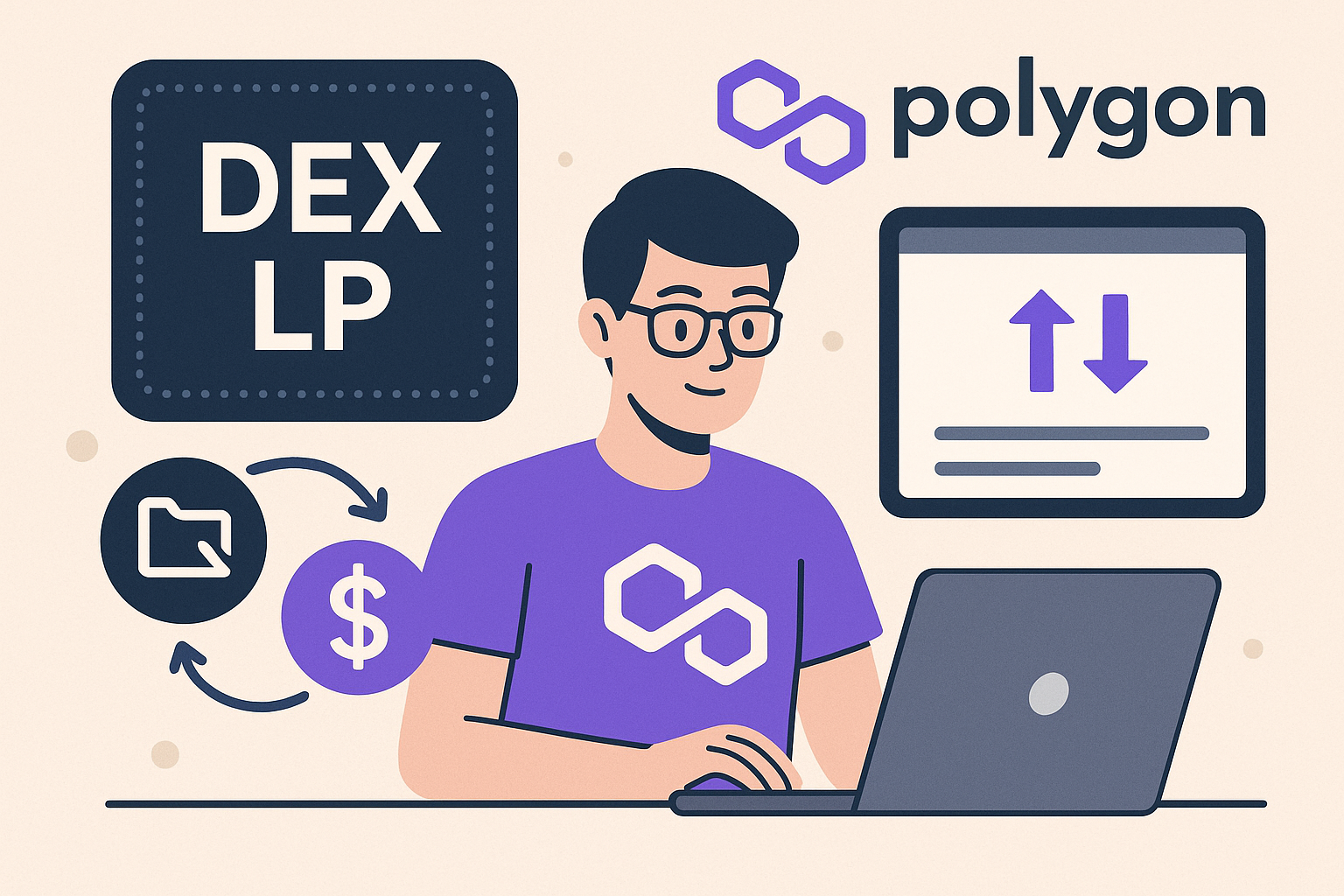
A DEX LP (Decentralized Exchange Liquidity Provider) is someone who deposits a pair of cryptocurrencies into a liquidity pool on a decentralized exchange (DEX) like Uniswap, SushiSwap, QuickSwap (on Polygon), or PancakeSwap. These pools enable trading by providing the necessary liquidity for users to swap tokens without relying on traditional order books. In return, LPs earn a share of the trading fees generated by the pool.
How Liquidity Pools Work
1. Deposit Tokens
You provide an equal value of two tokens (e.g., ETH and USDC) to a pool.
Example: If ETH = $2,000 and USDC = $1, you might deposit:
- 1 ETH ($2,000)
- 2,000 USDC ($2,000)
2. LP Tokens
In exchange, you receive LP tokens, which represent your share of the pool and track your contribution.
3. Trading Fees
When users trade using the pool, they pay a fee (e.g., 0.3% on Uniswap or QuickSwap).
These fees are distributed proportionally to LPs based on their share.
4. Automated Market Maker (AMM)
The pool uses an algorithm (like x*y=k) to set token prices based on supply and demand, ensuring trades can happen anytime.
How to Make Money as a DEX LP
Earn Trading Fees
The primary income source is trading fees.
Example: If a pool generates $1,000 in daily fees and you own 10% of the pool, you earn $100/day.
- Fees vary by platform:
- Uniswap: 0.05%, 0.3%, or 1%
- Curve: lower for stablecoins
- QuickSwap (Polygon): 0.25% typical fee
Additional Incentives
- Some DEXs offer native tokens as rewards (e.g., UNI, SUSHI, or QUICK).
- Yield farming programs may provide extra tokens to attract liquidity.
Stake LP Tokens
You can stake your LP tokens in other protocols to earn additional yields, compounding returns.
Steps to Become a DEX LP on Polygon
-
Choose a DEX
Popular options on Polygon: QuickSwap, SushiSwap, or Uniswap v3 via Polygon Bridge. -
Select a Pool
- Stablecoin pairs (USDC/USDT) → lower risk, lower fees
- Volatile pairs (ETH/MATIC) → higher fees, higher impermanent loss risk
-
Get a Wallet
Use a self-custody wallet like MetaMask, Trust Wallet, or Coinbase Wallet connected to the Polygon network. -
Deposit Tokens
- Connect your wallet to the DEX
- Approve and deposit equal values of both tokens
- Receive LP tokens as proof of your contribution
-
Monitor and Collect Fees
Fees accrue automatically. Redeem LP tokens to withdraw your share plus accumulated fees. -
Exit the Pool
Burn LP tokens to retrieve your tokens plus fees earned.
Risks to Consider
- Impermanent Loss (IL): Token price divergence can reduce pool value compared to holding tokens separately. IL is temporary unless withdrawn during imbalance.
- Smart Contract Risk: Bugs or hacks may lead to losses.
- Market Volatility: Higher risk for volatile pairs, but higher potential fees.
- Rug Pulls: Avoid low-reputation pools. Stick to established DEXs.
- Gas Fees: Polygon reduces fees compared to Ethereum, making frequent deposits/withdrawals cheaper.
Tips to Maximize Profits
- Choose High-Volume Pools: More trading activity = higher fees.
- Stablecoin Pools: Lower IL risk, smaller fees.
- Monitor IL: Use tools like APY.vision or DeFi Pulse.
- Compound Rewards: Reinvest fees or bonus tokens.
- Diversify: Spread liquidity across multiple pools.
- Stay Informed: Follow DEX updates on social platforms to catch incentives or low-fee chains.
Example on Polygon
You deposit $1,000 ETH and $1,000 USDC into a QuickSwap pool (0.25% fee tier).
- Pool generates $10,000 in daily trading volume → fees = $25/day
- Own 5% of the pool → earn $1.25/day ($456/year, ~23% APY before IL)
- Additional QUICK tokens rewards may boost returns further.
Adding liquidity on Polygon DEXs combines lower transaction costs with strong trading volumes, making it an attractive option for both beginner and experienced LPs.